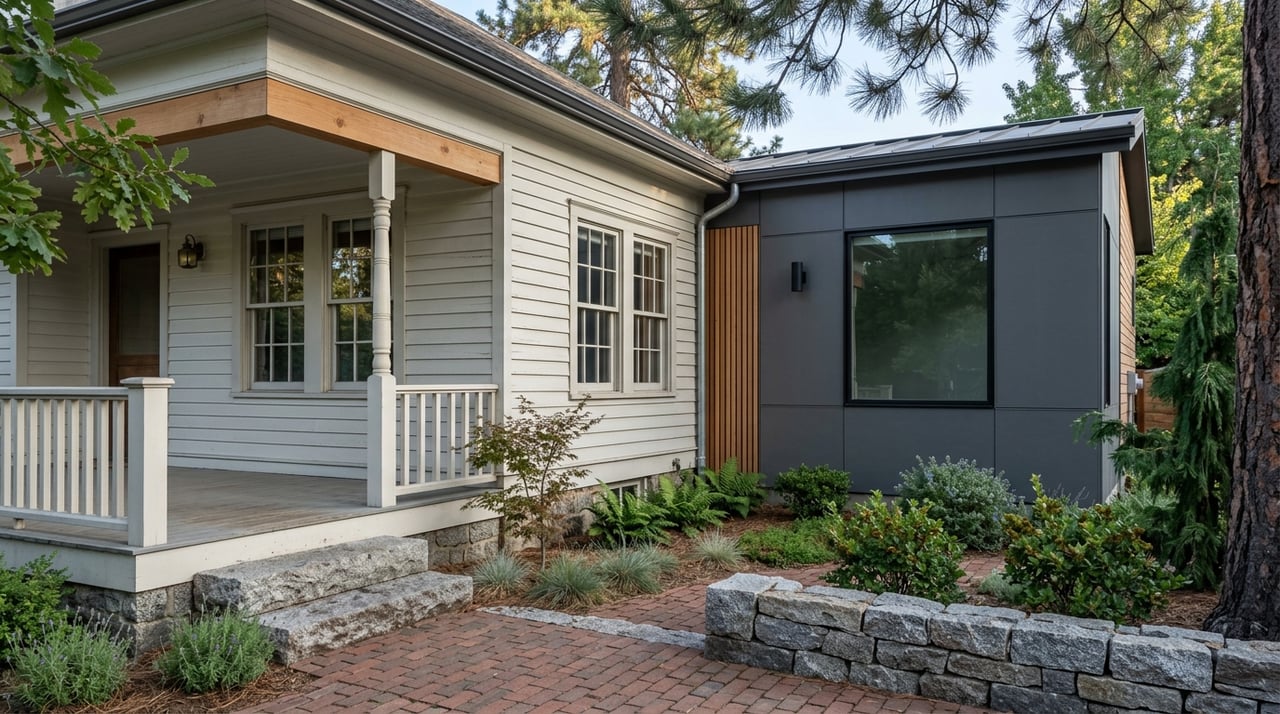
Wondering whether a historic home or a newer build makes more sense in Nevada City? In a small market with deep roots, that choice is about more than style alone. You need to weigh character, upkeep, review requirements, wildfire considerations, and the realities of limited inventory. Let’s break down what each option really looks like in Nevada City so you can move forward with more confidence.
Nevada City Has a Small, Distinct Market
Nevada City is a very small housing market, with about 1,629 housing units and 1,323 households across roughly 2.2 square miles. That scale matters because planning rules, design review, and historic considerations tend to feel more visible here than in larger cities.
The city’s historic identity shapes much of the local housing conversation. Downtown Nevada City is known for its historic fabric, with significance that reaches back to the 1850s through 1917. If you are shopping here, you are not just comparing square footage and finishes. You are often comparing different eras of construction and different paths to ownership.
Historic Homes in Nevada City
Historic homes in Nevada City appeal to buyers who want a strong sense of place. In and around the historic core, you will find architecture tied to multiple periods and styles rather than one uniform look. That variety is part of the draw.
The city’s historic inventory highlights Victorian-influenced brick and frame buildings, vernacular false-front structures, and details like balconies and verandas. It also includes examples with Italian Renaissance, Victorian, and Art Moderne influences. The result is a housing stock that often feels layered, individual, and closely tied to local history.
What Counts as Historic Locally
In Nevada City, historic preservation is a formal planning issue. Exterior work on properties in the downtown Historical District and on pre-World War II buildings outside the district, meaning buildings constructed before 1942, is subject to architectural review and alteration standards.
That means a home does not have to look like a museum piece to fall into a more review-driven category. If you are considering an older property, it is smart to understand early on how the city classifies it and what that may mean for future updates.
Why Buyers Love Historic Homes
The biggest advantage of a historic home is character. Older homes often offer original materials, distinctive details, and a setting that feels connected to Nevada City’s long-established downtown and surrounding streetscapes.
For many buyers, that kind of authenticity is hard to replace. If you care about architecture, craftsmanship, and the feel of an older foothill town, a historic property can offer an experience that newer construction usually cannot fully replicate.
The Tradeoffs of Older Homes
Historic charm usually comes with more maintenance decisions. Nevada City’s guidelines strongly encourage preserving original historic materials, and architectural review applies to exterior alterations, demolition, and similar work.
That can make projects less plug-and-play than they would be in a typical newer subdivision. You may need more planning, more patience, and a clearer understanding of what changes are feasible before you buy.
Older homes can also bring health and safety considerations tied to age. In pre-1978 housing, renovation may trigger lead-safe work practices. If materials that may contain asbestos could be disturbed, sampling or handling by an accredited professional may also be needed.
Can You Remodel a Historic Home?
Yes, historic homes can be remodeled in Nevada City. The key is that exterior changes are review-driven, and historic-district properties may be eligible for alternate standards under the California Historical Building Code.
That flexibility can be helpful, but it does not mean anything goes. If you are buying with renovation plans in mind, it helps to think through your goals before making an offer, especially if exterior appearance or structural changes are part of the plan.
What New Builds Are Like in Nevada City
If you prefer current-code construction, a newer home may sound like the easier option. In Nevada City, though, new construction still comes with meaningful constraints.
The city has adopted the 2025 California Building Standards Code, including the California Energy Code, California Existing Building Code, California Historical Building Code, California Green Building Standards Code, and California Wildland-Urban Interface Code. In practical terms, new builds are shaped by modern energy, safety, green-building, and wildfire-related requirements.
New Construction Is Not Abundant
One of the biggest things to know is that new builds are not plentiful in Nevada City. The city’s 2024 housing-element reporting showed 1 entitled unit, 0 permitted units, and 2 completed units, all of them ADUs.
There were no completed single-family detached, 2-to-4-unit, or 5-plus-unit permits reported that year. That suggests most new supply is incremental and often accessory or infill in nature, not large tract-style development.
Design Review Still Matters
A newer home does not mean a free pass on design. Architectural review applies to new construction as well as exterior alterations, and the city’s stated review goals include preserving Nevada City architecture in terms of historical value, site coverage, massing, materials, general design, and details.
Nevada City also describes itself as a small, compact historical town surrounded by green, wooded hills, with a goal of preserving tree cover and scenic corridors where possible. So even a brand-new home is typically expected to fit its setting.
Why Buyers Choose Newer Homes
The appeal of newer construction is straightforward. You may get current-code systems, more modern layouts, and fewer concerns tied to lead- and asbestos-era materials.
For buyers who want less immediate maintenance and a more predictable ownership experience, that can be a major plus. A newer home may also appeal if you value energy-code standards and updated building methods.
The Tradeoffs of New Builds
In Nevada City, the tradeoff is often not simplicity, but scarcity and regulation. Because new inventory is limited, you may have fewer choices. And if you are building or buying recently built property, design review and wildfire-related code requirements still shape what is possible.
That means the decision is not really old versus easy. It is often historic character with more preservation-driven upkeep versus newer construction with limited supply and tighter site and code constraints.
Wildfire Considerations Affect Both
No matter which path you choose, wildfire is part of the conversation. Nevada City says nearly all properties are in high or very high fire hazard severity zones.
That affects both historic homes and new builds, though not always in the same way. Newer homes are shaped by current wildfire-related standards, while older homes may require a closer look at defensible space, materials, and future improvement plans. Either way, this is not a detail to overlook.
Budget Expectations Can Vary Widely
Pricing in Nevada City can look different depending on the source and time frame. Mid-2026 figures showed an average home value estimate of $560,803 from Zillow, while Redfin reported a three-month median sale price of $796K ending in May 2026.
Those numbers are not interchangeable, but they do show how quickly expectations can shift in a small market with unique property types. If you are comparing a historic property to a newer home, price alone may not tell the full story. Condition, location, review considerations, and scarcity can all affect value.
How to Choose the Right Fit
If you are deciding between a historic home and a newer build in Nevada City, start with your priorities. The right answer depends on how you want to live, how much project tolerance you have, and what kind of property experience matters most to you.
A historic home may be a better fit if you want:
- Distinctive architecture and original details
- A home tied closely to Nevada City’s older streetscapes
- Long-term appreciation for character over convenience
- Flexibility to take on maintenance and review-driven updates
A newer home may be a better fit if you want:
- More current-code construction
- Fewer age-related material concerns
- A more modern layout or systems
- A lower appetite for immediate repair work
In Nevada City, though, there is often overlap. Some buyers fall in love with older homes but want realistic renovation guidance. Others want newer construction but need help finding limited inventory. That is where local market knowledge becomes especially valuable.
If you are weighing historic charm against modern construction in Nevada City, the best move is to look beyond the listing photos. Pay attention to review requirements, likely upkeep, wildfire context, and the pace of new supply. When you understand those moving parts, you can choose a property that fits both your lifestyle and your comfort level. For tailored guidance on Nevada City and the surrounding foothill market, connect with Frick n' Blazer Group.
FAQs
What makes a home historic in Nevada City?
- In Nevada City, exterior work on properties in the downtown Historical District and on pre-World War II buildings outside the district, meaning homes built before 1942, is reviewed under architectural-review and alteration standards.
Can you remodel a historic home in Nevada City?
- Yes. Historic homes can be remodeled, but exterior changes and demolition are review-driven, and some historic-district properties may use alternate standards under the California Historical Building Code.
Are new builds common in Nevada City?
- No. Recent city housing reporting showed a very limited pipeline, with 2 completed units in 2024 and both of those being ADUs.
Do historic homes and new builds both face wildfire issues in Nevada City?
- Yes. Nevada City says nearly all properties are in high or very high fire hazard severity zones, so wildfire planning matters for both older and newer homes.
Are historic homes always more expensive than newer homes in Nevada City?
- Not necessarily. Nevada City is a small market with wide pricing variation, so value can depend on condition, property type, location, scarcity, and the work or review requirements attached to a home.