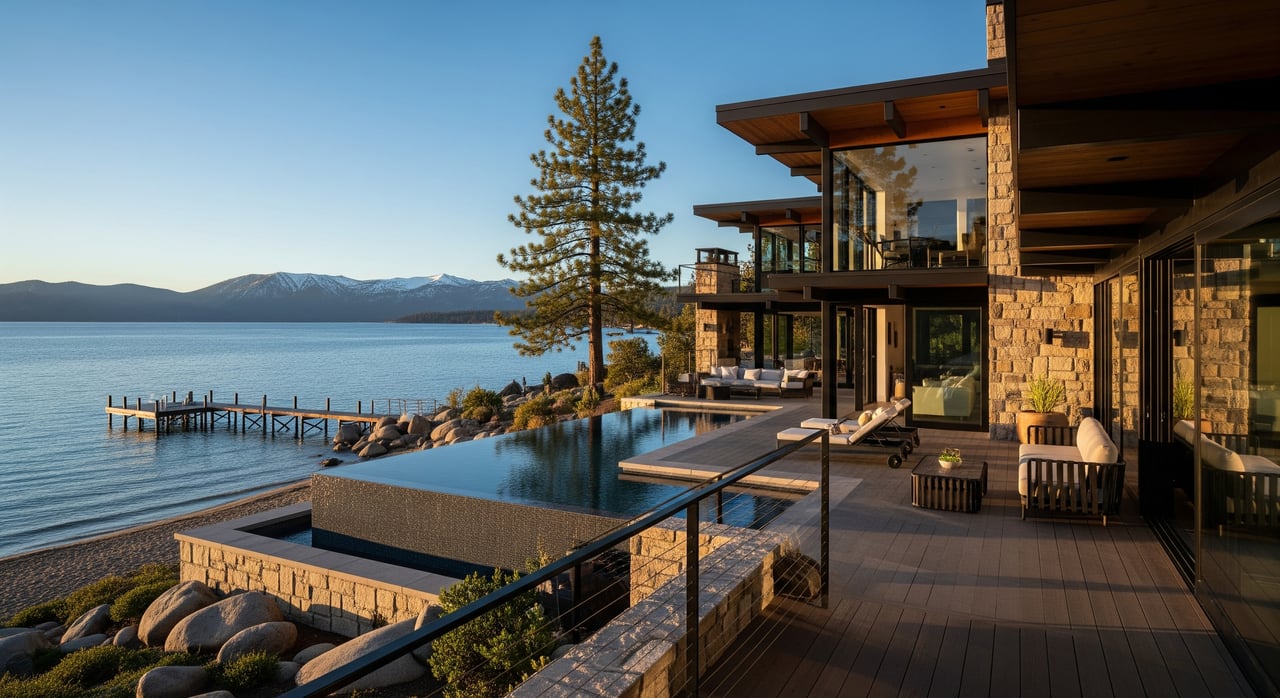
Eyeing a Lake Tahoe or Truckee home and wondering if your financing will be a jumbo? You are not alone. Many Lake Tahoe and Turckee purchases sit above standard loan limits, especially second homes and luxury properties near the lake or on the slopes. This quick guide shows you how jumbo loans work, what lenders expect, and the local details that can help you close with confidence. Let’s dive in.
Jumbo loan basics
A jumbo loan is a mortgage that exceeds the conforming loan limit set by the Federal Housing Finance Agency. Conforming loans can be purchased by Fannie Mae or Freddie Mac. Anything above the county limit is treated as a jumbo and follows stricter lender guidelines.
To check if your Lake Tahoe or Truckee purchase needs a jumbo, compare your expected loan amount with the current Placer County and Nevada County's conforming limit. Use the official FHFA lookup to verify the latest year’s number on the FHFA conforming loan limits page. Limits update annually, so confirm before you make an offer.
If your loan amount is above the county limit, lenders will underwrite it as a jumbo.
Why Lake Tahoe and Truckee buyers use jumbos
The Lake Tahoe and Truckee areas attracts high‑net‑worth buyers, second‑home owners, and investors seeking lakefront, mountain, or golf properties. Many of these homes sit at price points that exceed conforming limits. You also see unique property features like docks, steep sites, guesthouses, and larger acreage, which require careful appraisal and underwriting.
If you plan to use the home as a second home, expect different documentation, reserve, and loan‑to‑value requirements than a primary residence. Share your intended use early so your lender can place you in the right program and timeline.
What lenders look for on jumbo loans
Jumbo mortgages follow investor or portfolio bank rules rather than agency standards, so guidelines are usually tighter. The Consumer Financial Protection Bureau offers helpful context on how jumbo loans differ from conforming loans and how to shop for a mortgage. You can explore basics on the CFPB website.
Credit and history
Strong credit scores often earn better pricing. Many lenders look for scores in the 700 to 740 range or higher for top terms. A longer, well‑documented credit history with minimal derogatory marks can improve your approval odds.
Income, documentation, and DTI
Full documentation is standard. W‑2 borrowers will provide pay stubs and W‑2s, and self‑employed buyers should expect to provide business and personal tax returns. Some products allow bank‑statement or asset‑depletion analysis for self‑employed or variable earners. Many jumbo programs accept debt‑to‑income ratios up to roughly 43 to 50 percent, depending on your profile and the loan structure.
Reserves and seasoning
Jumbo loans commonly require larger post‑closing reserves than conforming loans. Lenders often want to see several months of payments in liquid assets, and second‑home or luxury purchases can push reserves higher. Be ready to verify the source of any large deposits.
Down payment and LTV
An 80 percent loan‑to‑value ratio, or 20 percent down, is common for conventional jumbo programs. Some lenders may allow higher LTV with strong credit and substantial reserves, but second homes and investment properties often require lower LTV and higher reserves. A larger down payment can improve pricing.
Rates and structures
Jumbo rates can be higher than conforming, but in some markets they are comparable or even slightly lower for well‑qualified borrowers. You will see fixed‑rate and adjustable‑rate options, and some lenders offer interest‑only structures in limited cases. Discuss the tradeoffs and prepay strategies with your lender.
Local property and insurance factors
Lake Tahoe and Truckee both sit in beautiful but complex mountain environments. Local features and risks matter to underwriters and can affect insurability, pricing, and timelines.
Wildfire and hazard insurance
Lenders require hazard insurance, and wildfire exposure is a key concern around Lake Tahoe and Truckee. Some insurers limit coverage or charge higher premiums in forested areas. Higher premiums raise your monthly payment, which can push your DTI up. Start insurance quotes early and share premium estimates with your lender so they can underwrite accurately. Shaye Blazer and Todd Frick have insurance companies they work with that can offer some of the best rates for their customers and they understand the the circumstances that are unique to buying in Lake Tahoe and Truckee.
Waterfront, docks, and flood zones
Shoreline and lake‑adjacent properties can bring environmental and permitting considerations. If a property falls within a Special Flood Hazard Area on FEMA maps, flood insurance will be required by the lender. You can review a property’s designation using the FEMA Flood Map Service Center.
Permits, HOAs, and rental rules
Recent renovations or additions without permits can stall underwriting. Collect permits and approvals, including HOA documents, before you go to escrow. Short‑term rental rules and HOA restrictions can affect investor assumptions, so disclose them upfront. For local permitting and county resources, visit the Placer County or Nevada County official sites.
Factor in local property taxes, insurance, and HOA dues when you evaluate carrying costs.
Appraisal and condition in luxury deals
Luxury, waterfront, or highly unique homes may not have many comparable sales nearby. Appraisals can require market condition addendums, expanded comparable sets, or review by a second appraiser. Expect thoughtful adjustments for features like docks, guesthouses, or steep terrain.
Underwriters will also confirm clear title and acceptable property condition. Depending on the home, they may request inspections for septic, wells, docks, or slope stability. If a property is not insurable to lender standards, approval can be delayed or declined until coverage is confirmed.
Lender‑ready checklist for Lake Tahoe and Truckee
Use this checklist to prepare before you write an offer:
- Verify whether you need a jumbo by checking the Placer County or Nevada County limit on the FHFA conforming loan limits page.
- Obtain a jumbo prequalification or, better, a preapproval with documentation review by a lender experienced in the Lake Tahoe and Truckee areas. Todd and Shaye recommend using one of there trusted lenders who have saved their clients so much money and time: Matt Sharp: https://www.newamericanfunding.com/mortgage-loans/mattsharp or Luke Lewis: https://crosscountrymortgage.com/scottsdale-az-3092/luke-lewis/
- Gather documents: 2 to 3 years of personal and business tax returns as applicable, recent bank and investment statements, W‑2s and pay stubs, or bank‑statement documentation if self‑employed.
- Review your credit report and address errors or high balances early.
- Build liquid reserves and be prepared to document sources of large deposits.
- Consider strategies to reduce DTI, like paying down installment debt.
- Decide on your target down payment and LTV based on program options and pricing.
- Start insurance outreach for hazard, wildfire, and flood, and obtain premium quotes. Shaye and Todd are happy to get this process started for you.
- Ask lenders about timeline, appraisal reviews, and any required inspections for unique features.
Timeline and offer strategy
Jumbo loans can take longer to process than conforming loans because of additional documentation and appraisal reviews. Plan your escrow timeline accordingly. Share insurance quotes, HOA details, and any permits early to avoid last‑minute conditions.
If you are selling another home or moving funds between accounts, discuss bridge options or sequencing with your lender. Keep assets stable during underwriting and avoid large unexplained transfers. Fast, complete responses to lender requests help you move from conditional approval to clear‑to‑close without drama.
Your path to the lake, simplified
Buying in Lake Tahoe or Truckee should feel exciting, not stressful. With the right preparation, a jumbo loan can be straightforward. You can focus on views, trail access, and time on the water while your team keeps the financing on track.
If you want a clear plan tailored to your price point, property type, and timing, connect with the local experts who do this every day. The Frick n' Blazer Group pairs deep Tahoe and Truckee knowledge with concierge service to help you line up the right lender, prepare cleanly for underwriting, and secure the home you want with confidence.
FAQs
How do I confirm if my Lake Tahoe or Truckee purchase needs a jumbo?
- Compare your expected loan amount to the current Placer County or Nevada County conforming limit on the FHFA conforming loan limits page. Anything above that limit is a jumbo.
Do jumbo loans usually take longer to close in Lake Tahoe and Truckee?
- Often yes. Extra documentation, appraisal reviews for unique properties, and insurance verification can extend timelines. Starting preapproval and insurance quotes early helps. Shaye and Todd will help expedite everything for you.
What changes for a second‑home jumbo in Truckee and Lake Tahoe?
- Many lenders require lower LTV, higher cash reserves, and specific documentation for second homes. Disclose your intended use early so pricing and guidelines match your plan.
How can wildfire insurance affect jumbo approval near Tahoe?
- Lenders require acceptable hazard coverage. Higher wildfire premiums raise your total payment and can push up DTI, so obtain quotes early and share them with your lender.
What if I am self‑employed and need a jumbo in Placer or Nevada County?
- Lenders offer bank‑statement and asset‑depletion programs, and some portfolio banks are flexible. Expect more documentation scrutiny and potentially higher reserve requirements.
How do I check if a lakefront property needs flood insurance?
- Look up the address on the FEMA Flood Map Service Center. If it sits in a Special Flood Hazard Area, lenders will require flood insurance.