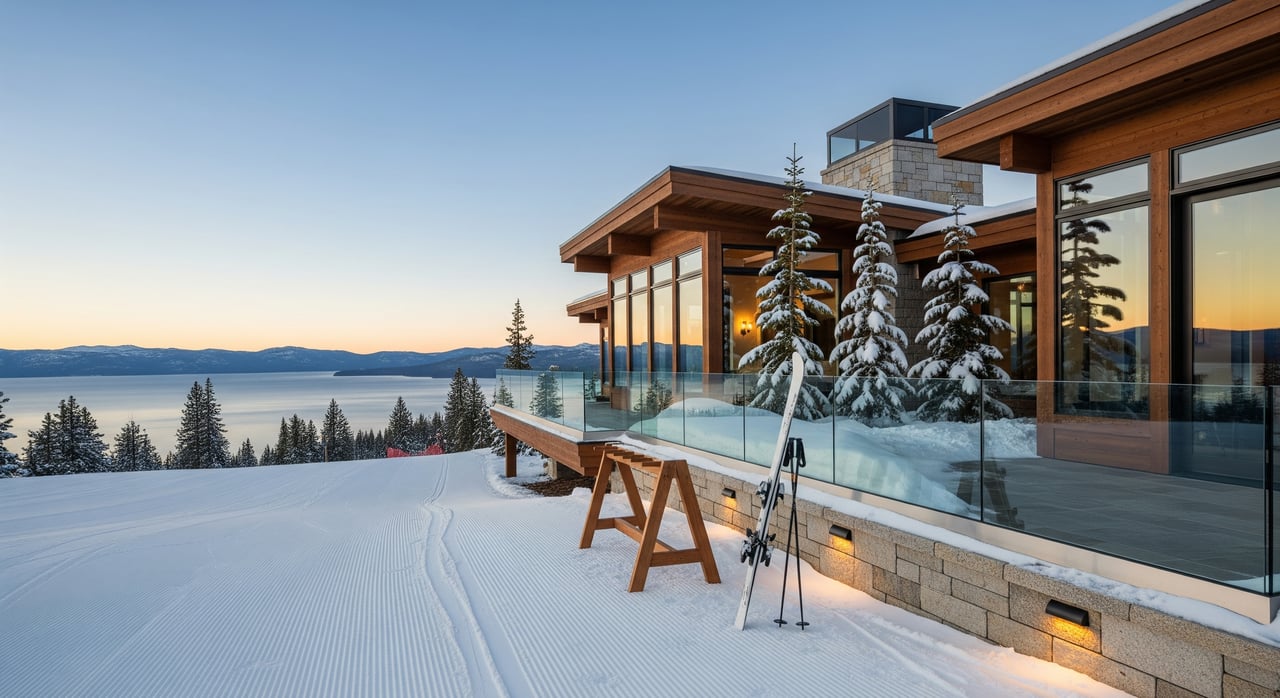
Ever pictured clicking into your skis right outside your door, gliding to the lift, and finishing your last run back to your patio? In North Lake Tahoe, that dream is possible, but the phrase “ski‑in/ski‑out” covers a wide range of realities. If you are eyeing a Tahoe City getaway or a rental‑friendly mountain home, understanding what counts as true slope access will save you time, money, and frustration.
In this guide, you will learn the real definitions, the local resort context around Tahoe City, winter factors that change access, and a practical checklist to verify any claim before you buy. Let’s dive in.
What ski‑in/ski‑out means
Core definition
At its simplest, ski‑in/ski‑out means you can ski directly from a maintained run to the property, and start your day by stepping from the property onto a maintained run or lift access point. You should not need to get in a vehicle to begin skiing. This is the baseline most buyers imagine when they hear the term.
The real‑world spectrum
Marketing language often stretches the term, so focus on what you actually do from the front door to the lift and back. Common versions include:
- True slopefront (doorstep) ski‑in/ski‑out: The property directly borders a marked, maintained run or lift plaza. No road crossings or long walks.
- Lift‑adjacent ski‑in/ski‑out: A short, groomed path connects you to a lift or gondola area. You may cross a pedestrian village space.
- Trail‑connected ski access: There is a connection to the trail network, but it may include a minor road crossing, stairs, or an unpaved path. Some areas use short people movers or shuttles.
- “Ski‑access” or “ski‑adjacent” marketing: Often means a short drive or a walk to a shuttle stop. Not true ski‑in/ski‑out.
The key is to verify each last‑mile action: do you ski, walk, climb stairs, cross a road, or wait for a shuttle?
Tahoe City basics
Resorts near Tahoe City
If you plan to base in Tahoe City on the North Shore, you will look to several nearby resorts:
- Homewood Mountain Resort: Closest to Tahoe City on the West Shore. Some slopefront parcels here can offer true ski‑in/ski‑out.
- Palisades Tahoe and Alpine Meadows: A major resort area east and northeast of Tahoe City. Some private homes have direct trail links, while others need short traverses or shuttle connections.
- Northstar California: North of Tahoe City near Truckee with village slopefront condos and townhomes that are often marketed as true ski‑out.
- Sugar Bowl: West of Tahoe City on Donner Summit. Less common for Tahoe City buyers but includes slopefront options.
- Tahoe Donner: Offers both cross‑country and downhill facilities near Truckee, with variable ski access that is not always simple slopefront.
Terrain, valleys, and ridgelines define what is realistic. Many homes sit on steeper hillsides or private driveways that influence the practicality of skiing right to the door.
Property types with access
Around North Lake Tahoe, you will see several property formats that promise ski access:
- Resort condos or village slopefront units at base areas.
- Townhomes or condos with recorded easements to designated ski paths.
- Single‑family homes along adjacent slopes, ranging from true slopefront to short traverses.
- Alpine hillside homes where access feels more like ski‑adjacent than true ski‑in/ski‑out.
The details matter. Ask how the HOA, resort, or owners maintain the actual corridor between the run and your door.
Winter realities that change access
Last‑mile conditions
Even when a property touches an official trail, the route may not be groomed as you expect. Steep connectors, snowbanks, or ice can turn a quick glide into a careful walk in ski boots. Deep snow can block secondary paths, and some properties require removing skis to navigate steps or driveways.
Resort operations
Resorts may pause access for avalanche mitigation or temporary closures. Night operations are limited, and most runs are closed after lift hours. If you rely on skiing to reach your property after hours, review what routes are open, where lighting ends, and your safe pedestrian alternative.
Roads and transportation
Mountain driving affects your arrival and your guests. Chain controls and closures can impact SR 267, CA‑28, and I‑80 during winter storms. Parking at base areas is often limited, and some slopefront locations depend on gated parking, assigned spaces, or shuttles for overflow and guests.
HOA and building operations
Snow removal responsibilities vary widely. Some HOAs keep ski corridors and walkways open. Others focus on common areas while owners clear from their door to the snow. In heavy storms, utilities and emergency access can be affected, so plan for backups and confirm your plow access.
Rentals and guests
If you plan to rent, clarify what your guests can actually use. Some complexes provide shuttle privileges or parking passes while others do not. Make sure your listing language matches the access your renters will experience in a typical week.
Verify before you buy
On‑site test checklist
Use showings to walk the exact route, ideally in ski boots:
- Can you ski from the property to a named lift without removing skis? If not, what is required: walking, stairs, or a road crossing?
- Walk every step in boots and note gates, steps, steep walkways, and potential pinch points like ropes or fences.
- Confirm the route appears on the resort trail map as a maintained run or a designated connector.
- Identify where the last groomed surface ends relative to your front door.
- Check for a safe and legal pedestrian route for early mornings, late nights, or after lift closures.
Documents and records to review
Before you remove contingencies, request the paperwork that proves access:
- A title report confirming any deeded ski easements or rights of way.
- HOA CC&Rs and maintenance agreements that spell out who clears snow on trails and walkways.
- Resort confirmation that the property abuts resort land or has permission for trail use, in writing when possible.
- A look at historical trail closures and avalanche mitigation that might affect your route.
- Parking specifics and guest limits, including base access and any remote or overflow policies.
Seasonal and operational checks
Conditions shift across winter and spring. Verify these items for your dates of use:
- Resort operating hours and whether the route stays open in low snow or spring corn conditions.
- Typical county and state road advisories for chain controls and closures on your primary approach.
- Emergency access during storms: confirm the driveway can be plowed and reached by service vehicles.
Rental and usage specifics
If rental income is part of your plan, document the rules upfront:
- HOA and resort rental restrictions, including nightly limits.
- Whether the resort markets your complex as ski‑in/ski‑out or if that is only the seller’s claim.
- Whether guest passes, shuttle privileges, and parking passes can transfer to renters.
Red flags to avoid
- Vague listing language like “near the slopes” or “short walk to lifts” without a map or written route.
- No recorded easement where the route crosses private land.
- Access that requires crossing a busy plowed road or an unsigned path.
- HOA disclosures showing repeated disputes about ski paths or deferred snow maintenance.
How to think like a local
In North Lake Tahoe, micro‑location is everything. Valleys and ridgelines shape where runs flow, and small connectors can make or break everyday usability. A condo with a groomed spur to a lift may ski better than a hillside home that is technically adjacent to a trail but forces you to remove skis and navigate steps. When in doubt, test the route twice: once in midwinter storm conditions and once in spring.
Protect your investment
Treat ski‑in/ski‑out as a set of verifiable facts, not a marketing headline. Pair your on‑site test with a title report, HOA documents, and written confirmation of resort permissions. Review typical road advisories for your approach to the property, and plan for snow removal, parking, and guest logistics. With the right due diligence, you will know exactly how your day starts and ends on snow.
If you want a guided, slope‑savvy search around Tahoe City, we can help you map claims to reality, source private and off‑market options, and pressure‑test access before you write an offer. Reach out to the Frick n' Blazer Group to Schedule a Private Tahoe Consultation.
FAQs
Is ski‑in/ski‑out guaranteed every winter in North Lake Tahoe?
- No. Heavy storms, avalanche mitigation, grooming schedules, and temporary closures can interrupt access. Always verify operations and backup routes.
How long is the walk if a home is ski‑adjacent, not true slopefront?
- It varies. Expect anywhere from immediate doorstep access to 5–15 minutes or more if you cross roads, traverse slowly, or rely on shuttles.
Are slopefront homes more expensive to insure or maintain?
- Possibly. Plan for higher snow‑removal costs, HOA fees, liability exposure, and risk considerations like avalanche zones when applicable.
Can resort expansions or projects change my access over time?
- Yes. Resort master plans and land changes can open or close access corridors, so review current plans and recent approvals during due diligence.